
Cake in Isfahan

Well, my poetry enthusiasts, it’s been a bit of a week, hasn’t it? Apologies in advance but I’m just not of of those people who can go, “Yay, I’ve had this published and that other thing published and isn’t it all great” when the world is having such a tricky time, when the Middle East is having such a tricky time, when countries that my country is allied with are dropping bombs on children (again). And why, for fuck’s sake?
I am recovering from a bout of flu so maybe I am more emotional than usual but I have found myself sifting through the many photographs I have from a visit we made to Iran back in 2016. Some of you will also have been to this amazing country. We arrived at the start of the Nowruz holiday, which is the Zoroastrian New Year. Zoroastrianism is, I think, one of the world’s oldest monotheistic religions. Its motto is Good Thoughts. Good Words. Good Deeds. I reckon that’s a motto we could all get behind right now.
So here are a couple of photos and a few poems for you. The first poem is one I originally wrote as a much longer piece in response to reports of attacks on Palestinian homes in the occupied territories but truthfully this could be Gaza, Ukraine, Iran, Israel. Whoever they are, what is happening to them breaks my heart.
The State Of Things
Our world is over he says/ walking over the rubble/ walking
over what used to be olive trees/ and he gestures with his hand/
to where might be / the most instructive place to look/ inviting
your eyes to see whatever remains of his old life/ whatever is
still standing/ though in truth/ there is nothing/
You might recall that a couple of years ago a video of woman singing in the atrium of the mosque in Isfahan went viral. Women are not, I believe, allowed to sing there. In the video as the security detail approaches her, she holds up her hand to rebuff them and manages to finish her song. Brave, beautiful and full of faith.
She Sings In The Mosque At Isfahan
It is a thing of beauty.
Blue tiled facade mirrors the
loveliness of heaven,
proclaims the ninety-nine names
of God:
the most sacred
the merciful
the first
the last
the most loving
the embodiment of peace.
The stone floor of the atrium
is worn by centuries of feet;
it is the colour of the desert,
the colour of honeycomb
the colour of halva,
of caramel -
the sweetness of faith.
There stands a woman,
veiled and clothed
in the silence of a law
insensible to joy,
a single woman
becomes in that moment
all women
in her courage and her love
when she steps out
from the silence and
sings
in praise of her creator
sings
in her courage and her love
a single voice
offered as a gift to
the first
the last
the most sacred
the merciful
the most loving
the embodiment of peace.
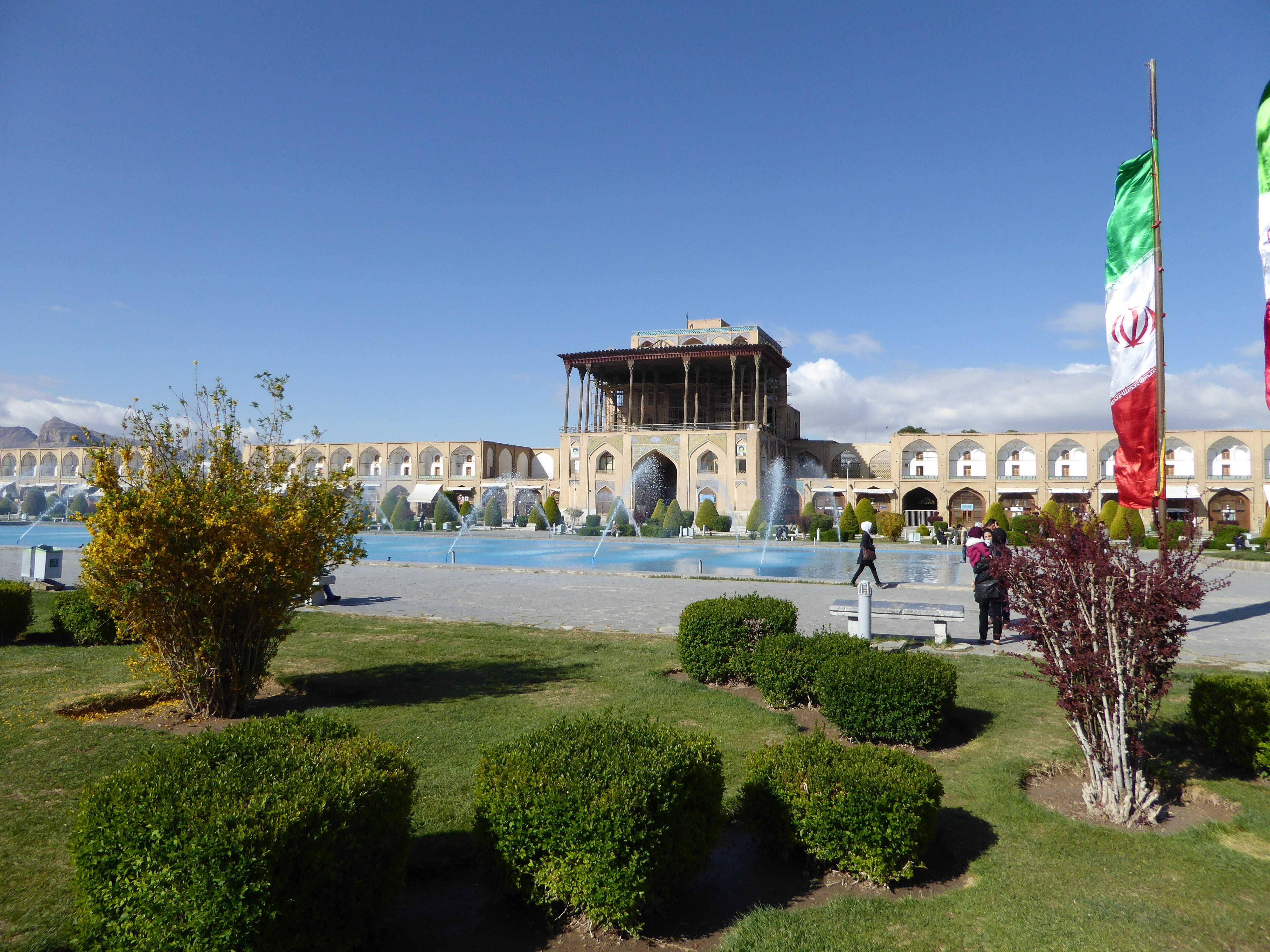
And finally, because it mentions the poet Hafez and because you are of course poetry enthusiasts, a poem I wrote during my trip. Hold in the Light all those who live under the shadow of war. Remember the motto.
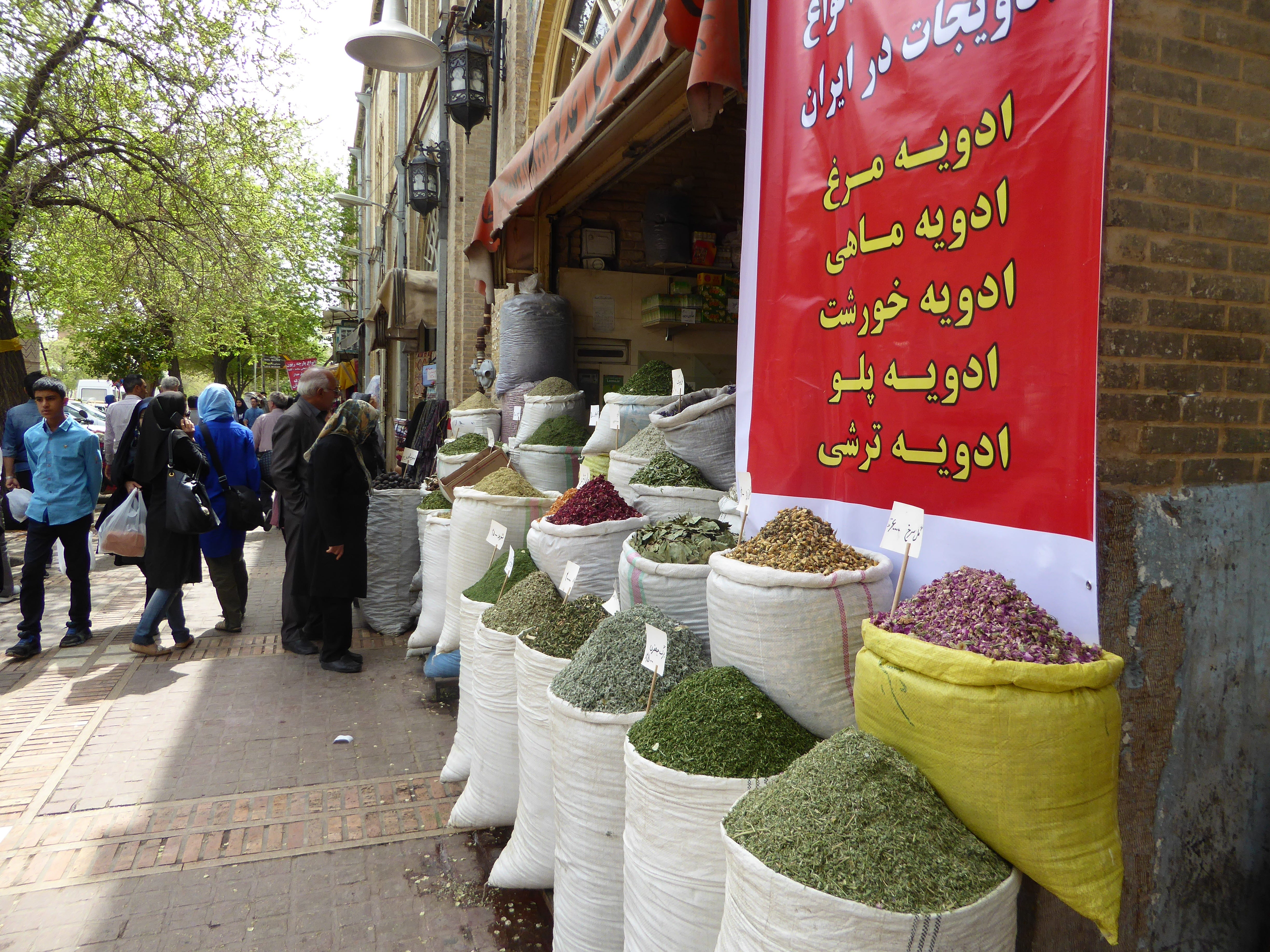
Nowruz in Shiraz
The morning air is laced with
the smell of dill and fenugreek;
faces bright with celebration,
pansies in playful crowds
nod in the breeze.
We sit on the steps of
the tomb of Hafez,
our arms full of calendula
and orange blossom
(burnt-gold petals to heal
the hurts of winter, and
sensuous white for love.)
Beautiful poems, Beth. I've just finished a morning workshop on writing political poetry, led by Steve Pottinger. I chose to draft a poem about the recent 'legalisation' of the behaviour of Israeli settlers on the West Bank in Palestine. I only wish I could attain the richness of your poems, especially 'She Sings In The Mosque At Isfahan', a moving piece on so many levels, achieved in the light of your direct experience of the Muslim world.
I read your poetry collection again recently, Beth. There are many poems in it that speak to me. I thought of your poem 'Zarathustra in Aden' after reading your piece above, with your poem 'The State of Things' reminding me of it immediately. And 'She Sings in the Mosque at Isfahan' is exceptionally beautiful. I hope your most recent poems will be part of a new collection soon.