
Holding up a Mirror

So the flurry of excitement and activity around the launch of my latest poetry book are over and I’m taking a little time to reflect on things. What things?
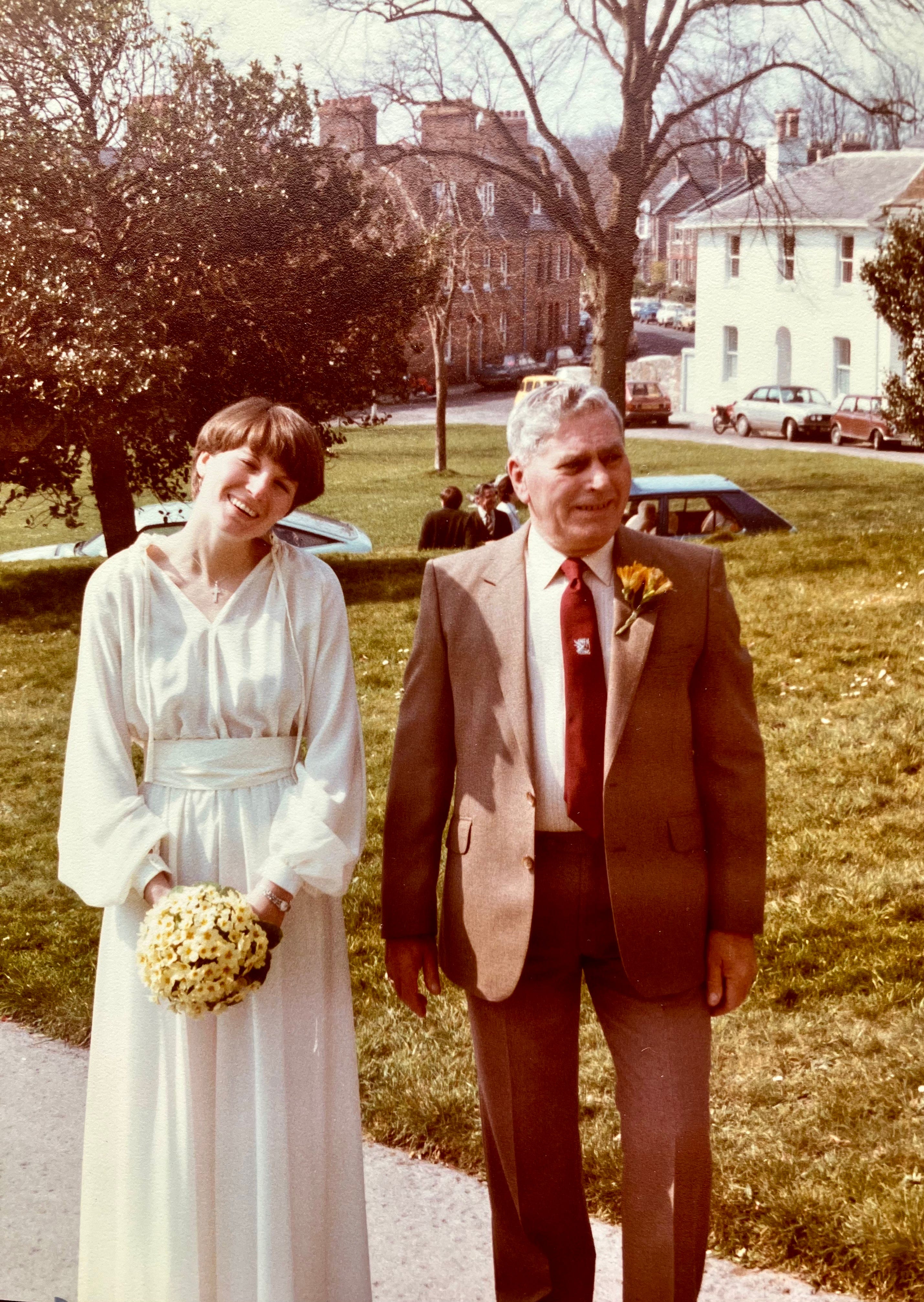
I never set out to write a series of poems about my father. I was only 26 when he died. He never knew me as an adult, never knew my children. I am fascinated that both of my sons remind me of him — though in very different ways. My relationship with my parents was difficult ( isn’t it always? Ask Mr Larkin) and I was probably a difficult child, wanting as I did, books and history and someone who wasn’t a teacher to tell me ‘well done.’ I was the youngest of five and there was a huge age gap; my parents had thought themselves done with parenting. I am not, therefore, one of those who look back on my childhood with fondness.
I had written poems about places that featured in my childhood but they didn’t attract any positive response. And then…I found myself revisiting memories, trawling through photos and cards, talking with my sister and the collection emerged. When I had not expected was how healing this process would be. Holding up a mirror in so far as I was able helped me to come to terms with some things and to understand my father better. I discovered huge love and sympathy for him as a result of the writing process. How wonderful is that?
At my in -person launch event someone said they loved the poems but wouldn’t have wanted ‘him’ as their father and I found myself quietly indignant and protective of my dad. I had walked a few miles in dad’s shoes by then and felt he needed protecting. Despite the poems being about a specific man, a specific childhood, and despite many people being shocked by things that to me were my normal life, the poems seem to resonate and that can only be good.
The whole thing has got me thinking about how important it is to try and put ourselves in other people’s shoes in order to try and understand better. So, here’s a piece about shoes for you. (Bet you weren’t expecting that)
Shoes Might Signify Something
I dreamed a poem about shoes.
“That means something,”
my dream- self thought,
though all the while inside the dream
my conscious- self kept interjecting
that the poem did not exist
outside my dream and waking
would bring disappointment.
Which of course, it did.
There was no poem,
only an idea of shoes, how
they were somehow metaphors.
I tugged at at the fragments
of my poem dream where
I had shared my shoes
with a stranger,
where we took turns to venture out
in my red ballet pumps,
their black sneakers,
walked a mile in them together,
learned the impression
of the other’s feet
each time we slipped them on.
I continued my reflection and thought about the bits and pieces I had used to try and make sense of dad’s life and my life as his daughter. Years ago I wrote a poem imagining my life as a museum of exhibits. I recommend we all do this from time to time. It might help others to walk a mile in our shoes and it might help us to hold up a mirror to our own lives and understand ourselves better . Here is the poem.
A Guide To The Museum Of The Author’s Life
In The Room of Adversaries
you will find all those who cast a shadow over her,
obscuring her own shade or keeping her from the sun.
The angle of the light attempts to recreate an impression
of shadows in the early morning
and late afternoon.
The Gallery of the Judiciary
pertains to the law makers of her youth.
It contains examples of strictures imposed by God and the Queen,
by the father who ruled that there was a place for everything
and everything must be in its place.
The atmospheric conditions here are strictly controlled
so that the fabric of the laws remains stable.
It is a sterile environment.
The Hall of Mirrors exhibition allows the visitor to see
the subject through some special mirrors.
A few of these give no reflection at all,
others reflect her as too fat, too thin, too arrogant,
too pitiful.
Visitors are invited to make their own judgment.
In the Trophy Cabinet are things the author gathered in later life.
Note the birth tags from her children’s wrists, letters
from students and their parents; a postcard from her
father written just before he died.
There is a coin from Jerash, and the worn terracotta head
of a Roman god, unearthed in Libya.
Notice too, the joyous peal of bells from her wedding day,
the loose threads salvaged from her academic gown.
On the Way Out spend a few minutes looking at the words
she scattered, guerrilla fashion, in the hope that some, at least,
would grow.
I really enjoyed this - it’s a fitting companion to your collection as well - perhaps a forward to the second edition?
I love what you have created in the dream poem too. A poem about a dream poem.
I shall have to rise to the challenge and write a poem about the museum of Mike O’Brien.
Lovely piece.
I am going through a belated process that is similar to that. In relation to my father, mother , and stepfather. It is painfully healing.